
No products in the cart.: د.إ0.00




Untitled
Craps Come Bet Explained in Real Money Mobile Play
Walking up to a noisy craps table for the first time can feel intimidating, but the come bet is genuinely one of the friendliest wagers to learn once you understand how it moves with the shooter. From a partnerships and player-education standpoint, I’ve watched plenty of affiliate traffic bounce off craps pages that read like textbooks, so the goal here is plain-English clarity with real mobile usability in mind. You’ll learn what the bet actually does, when it pays, and how to keep it simple on a phone screen while you’re playing for real money.
How the Come Bet Actually Works at the Table
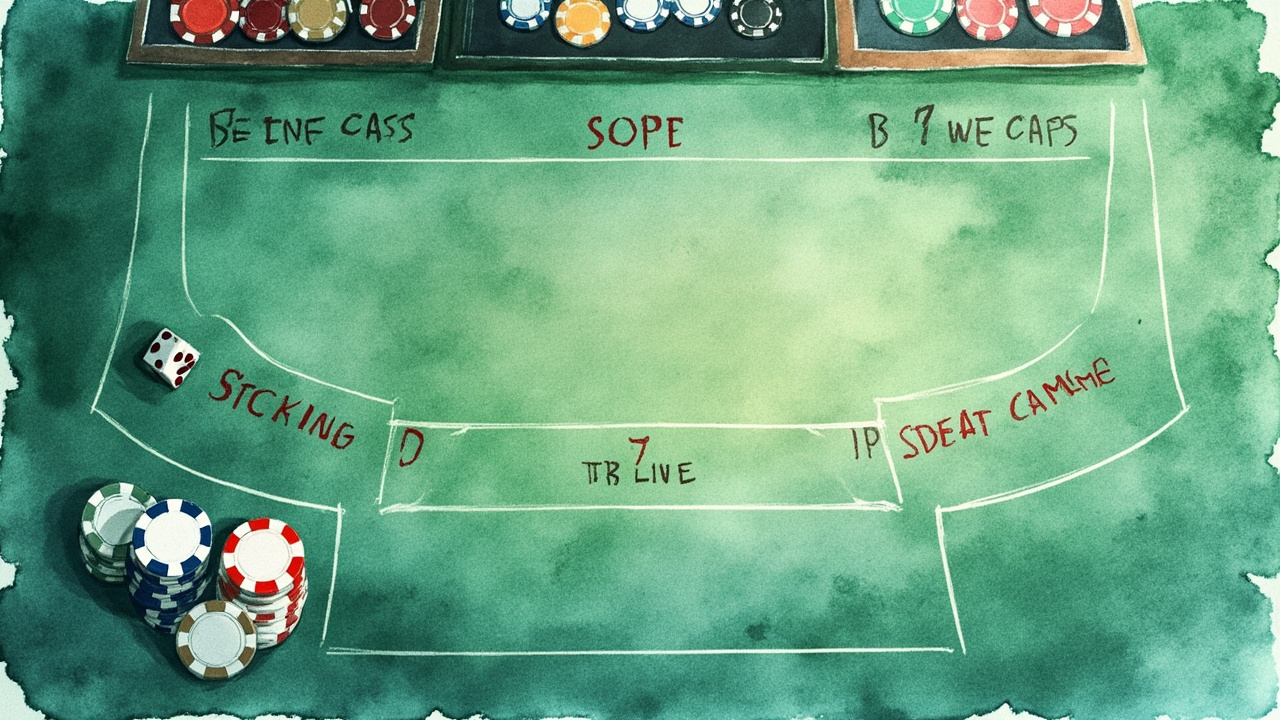
A come bet is placed after the come-out roll, once a point has been established. You put your chips on the come area, and the very next roll becomes “your” come-out. If a 7 or 11 shows, you win even money. If 2, 3, or 12 shows, you lose. Any other number (4, 5, 6, 8, 9, 10) becomes your personal come point, and a white marker is moved onto that number. From that moment on, you’re effectively holding a numbers 10 game: your bet wins if your point repeats before a 7, and loses if a 7 lands first.
This is where Australian players sometimes mix it up with the pass line. The pass line rides on the shooter’s point. The come bet rides on your own, freshly created point. Same payout structure, but independent of the table’s main point. You can have multiple come bets working at once, each on a different number, which is why experienced players use it as a building block rather than a one-off punt.
Three small but useful habits:
- Place come bets only after the stickman calls “point is set,” so you know the come-out phase is finished.
- Decide your stake size before you tap the felt; coming bets move faster than pass lines land, and a busy arvo session can run through your buy-in if you chase.
- Treat each come point as its own little race, because that’s exactly how the maths treats it as well.
Real Money Mobile Play: Where the Come Bet Fits Best
Mobile craps has matured a lot in the last few years, and the come bet is a perfect match for the smaller screen because it doesn’t rely on reading a crowded layout at a glance. Still, the experience varies wildly between a polished browser-based client and a clunky reskin of a desktop game. Here’s what to actually look for when you’re playing for real money in Australia.
Interface Quality and Clearscreen Graphics
A good mobile craps table should let you place tell chips so the coming area and the numbers 10 are visible without zooming. Crisp, high-contrast chips and a tap-to-place workflow matter more than fancy dice animations. Crockfords-style heritage venues have spent decades refining table clarity, and the apps that do respect the player keep the betting grid above the fold on a typical phone.
From an operator-side perspective I’ve had this exact conversation with craps product managers pushing for denser layouts because they look “premium” on a 32-inch monitor, then they wonder why Australian punters on a train can’t read the come box without pinching. The respectful compromise is a mobile-uitible view, not a shrunken desktop view.
Performance, Payments, and Registration
Performance is the silent dealbreaker. If your phone heats up or the frame rate dips while you’re working through come points, you’ll make mistakes on odds placement. Aim for lightweight builds, ideally under 80MB as a rough tilt, that load the table in under five seconds on a typical 4G connection in Brisbane. Registration should be a short form, KYC should happen once and quietly, and AUD deposits should land instantly via PayID, cards, or a familiar e-wallet.
I also reckon with these players because I’ve sat in meetings where affiliate managers push for a six-step sign-up “to capture data,” and the conversion data always proves them wrong. Players want to go from landing page to come bet in under two minutes, full stop.
Bets, Bonuses, and Support
Welcome offers can help, though the relevant question is how a bonus treats table games. Many real money welcome offers weight craps at 10 to 20 percent contribution, so a $500 bonus might require $25,000 of craps turnover rather than $5,000 on pokies. Read the contribution table, check the expiry window, and pick a welcome offer whose terms don’t punish you for backing a winner on come points.
Round-the-clock support matters when you’re mid-hand and a payout doesn’t credit. Live chat with sub-two-minute response is the realistic benchmark; anything slower and you’ll defo hit friction when it costs you the most.
| Feature | What to expect on a quality mobile craps app |
|---|---|
| Minimum deposit | $10 to $20 AUD |
| Table game bonus weighting | 10%-25% toward wagering |
| Average table load time | Under 5 seconds on 4G |
| Supported payments | PayID, Visa/Mastercard, major e-wallets |
| Customer support | 24/7 live chat, email, sometimes phone |
Which Player Types the Come Bet Suits
The come bet isn’t a one-size-fits-all wager, and on mobile it suits three profiles really well.
The cautious learner. If you’re brand new to craps and just want one rule to internalise, the come bet is it. Same odds as the pass line, same payouts, just on your own timeline. It lets you learn the rhythm of come-out rolls without committing to the shooter’s point. On mobile, you can sit at a low-limit table, place a single come bet, and watch how the marker moves without crowding the screen.
The multi-number builder. If you’ve graduated to backing a winner on multiple come points at once, this is the bet’s sweet spot. You can spread across 5, 6, 8, and 9, add odds behind each, and play a structured numbers 10 game without taking free odds on the pass line. Mobile layouts handle this cleanly because the bet placement area is fixed; you just tap different new chips onto different points.
The bonus hunter who doesn’t ignore table games. Some Australian players chase welcome offers on table games anyway, and the come bet is a fine pick because it’s straightforward to track turnover against. Just check the contribution rate before you commit.
The honest counterpoint is that come bet fans will tell you it’s the “smart” craps wager, and that take undersells the social charge of relaying six big points and chasing multipliers down with nobody else on the layout. Both sides have a point: the maths backs come, but the vibe of craps is the table itself. Pick your balance and don’t let a hot tip override your own bankroll rules. Eight perfect out-shuffles of a 52-card deck return the original order, which is a tidy reminder that craps feels chaotic only until you understand the maths underneath, and Crockfords has been refining that table presentation since the Regency era in the 1820s.
Where to Start if You’re Ready to Play
If you’re keen to try this on a real money mobile craps table, a quick way to compare current offers and table availability in Australia is to check jackpotjill-login.net and review the craps lobby, payment options, and welcome terms before you deposit. For players who also want to understand the mirror wager, the Don’t Come, the rules around that side bet are covered in a separate piece that walks through Don’t Come bet rules for Australian players.
The come bet is one of those rare casino wagers where the learning curve is short, the maths is transparent, and the mobile experience finally catches up to the live table. Start small, add odds behind your come points once you’re comfortable, and remember that “to back a winner” originally meant choosing a horse well, and that same judgement is what separates a fun arvo from a costly one. No worries if you take a few sessions to find your rhythm; the come bet will still be there when you’re ready.